Listeners
A listener is the public TCP bind and protocol where user traffic enters p2pstream.
What It Is
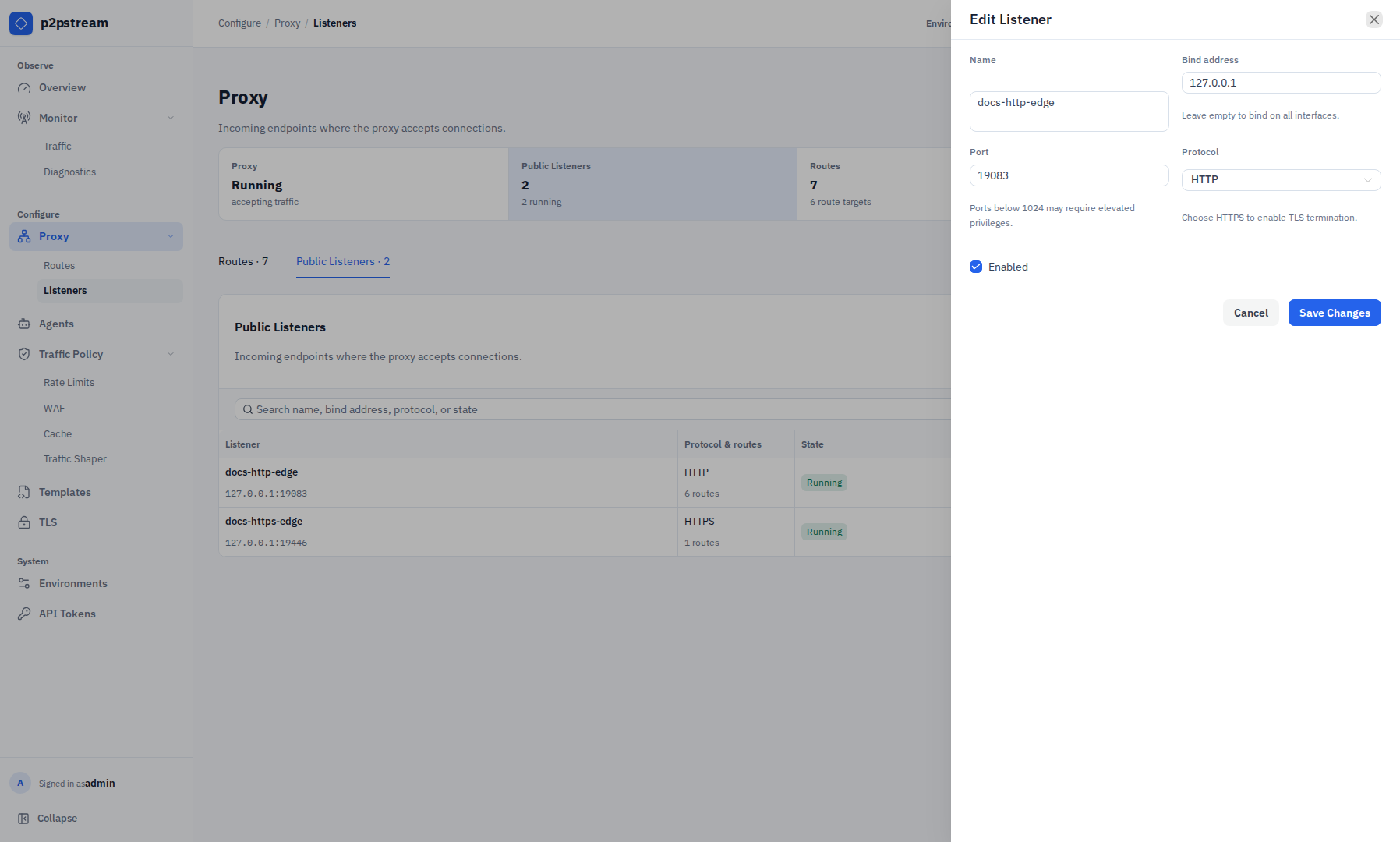
Listeners belong to the public proxy runtime, not the management server. Each listener has a protocol, bind address, port, and enabled flag. Default behavior is modeled as an enabled default route for that listener.
| Protocol | Behavior |
|---|---|
| HTTP | Plain HTTP listener. Also serves ACME HTTP-01 challenges. |
| HTTPS | TLS listener with SNI certificate selection. Also supports ACME TLS-ALPN-01 challenges. |
When It Matters
Listeners matter when publishing apps, issuing ACME certificates, changing ports, binding only to loopback, or running behind Docker/NAT/firewall rules.
Runtime Behavior
An empty bind address means all interfaces. Ports must be between 1 and 65535.
| Bind address | Port | Meaning |
|---|---|---|
| empty | 80 | Listen on all interfaces inside the container or host. |
127.0.0.1 | 8080 | Listen only on loopback. |
192.0.2.10 | 443 | Listen only on that host address. |
Enabled means the listener is part of desired configuration. Running means a server socket is currently active. Disabling a listener stops its runtime. Deleting a listener requires it to be stopped or disabled first.
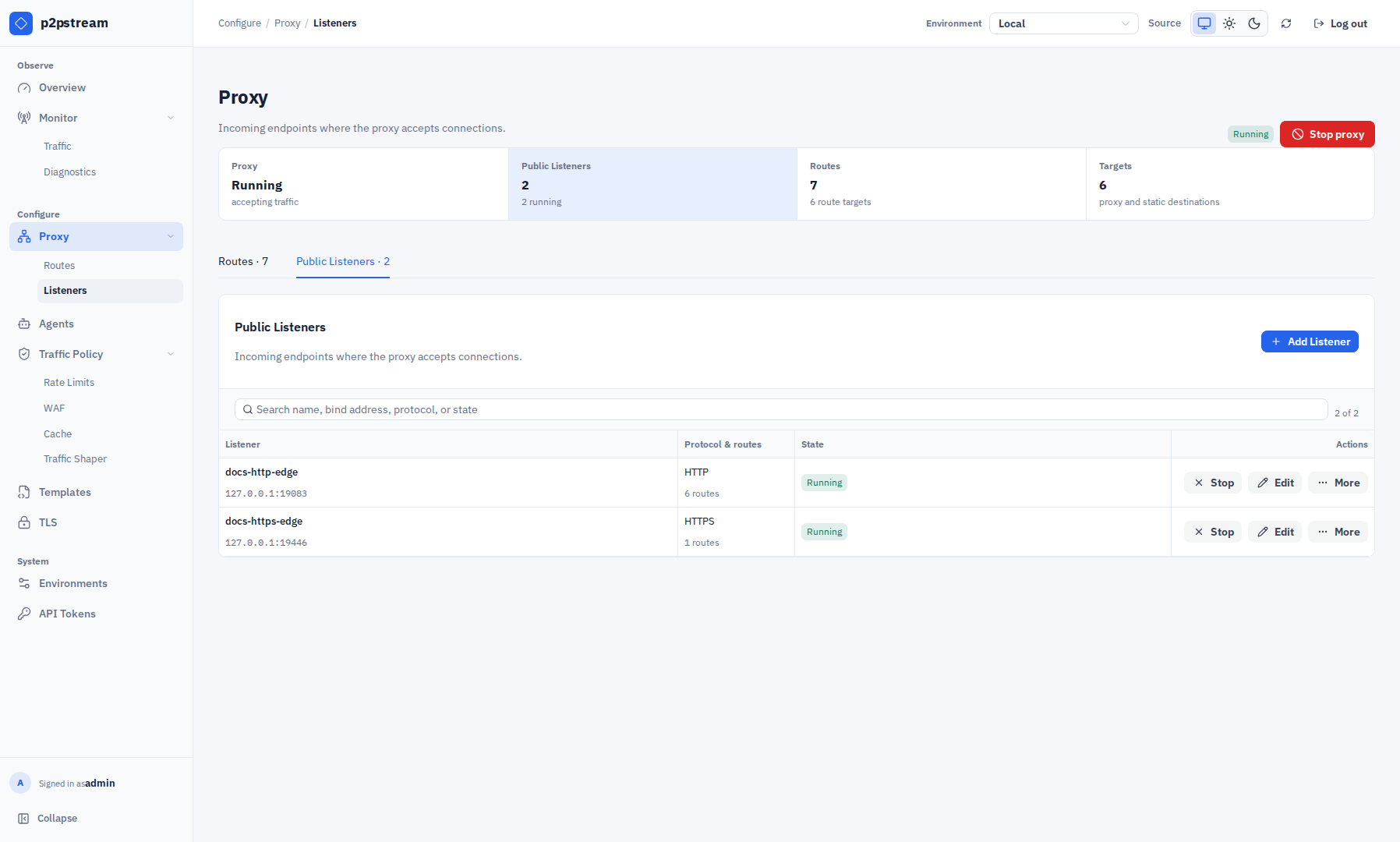
Manage listeners under Proxy → Listeners. The searchable table keeps protocol, route count, bind address, and runtime state on one row. The common Stop or Start and Edit actions remain visible; less frequent lifecycle actions are grouped under More.
On an empty database, p2pstream creates:
| Listener | Protocol | Port |
|---|---|---|
public-http | HTTP | 80 |
public-https | HTTPS | 443 |
Both use default routes with static welcome targets until you replace those targets or add more specific routes.
Common Mistakes
- Creating a listener in the UI but not publishing the container port in Compose.
- Binding to an address that does not exist on the host/container.
- Using HTTP-01 without a reachable HTTP listener on port
80. - Using TLS-ALPN-01 without a reachable HTTPS listener on port
443.